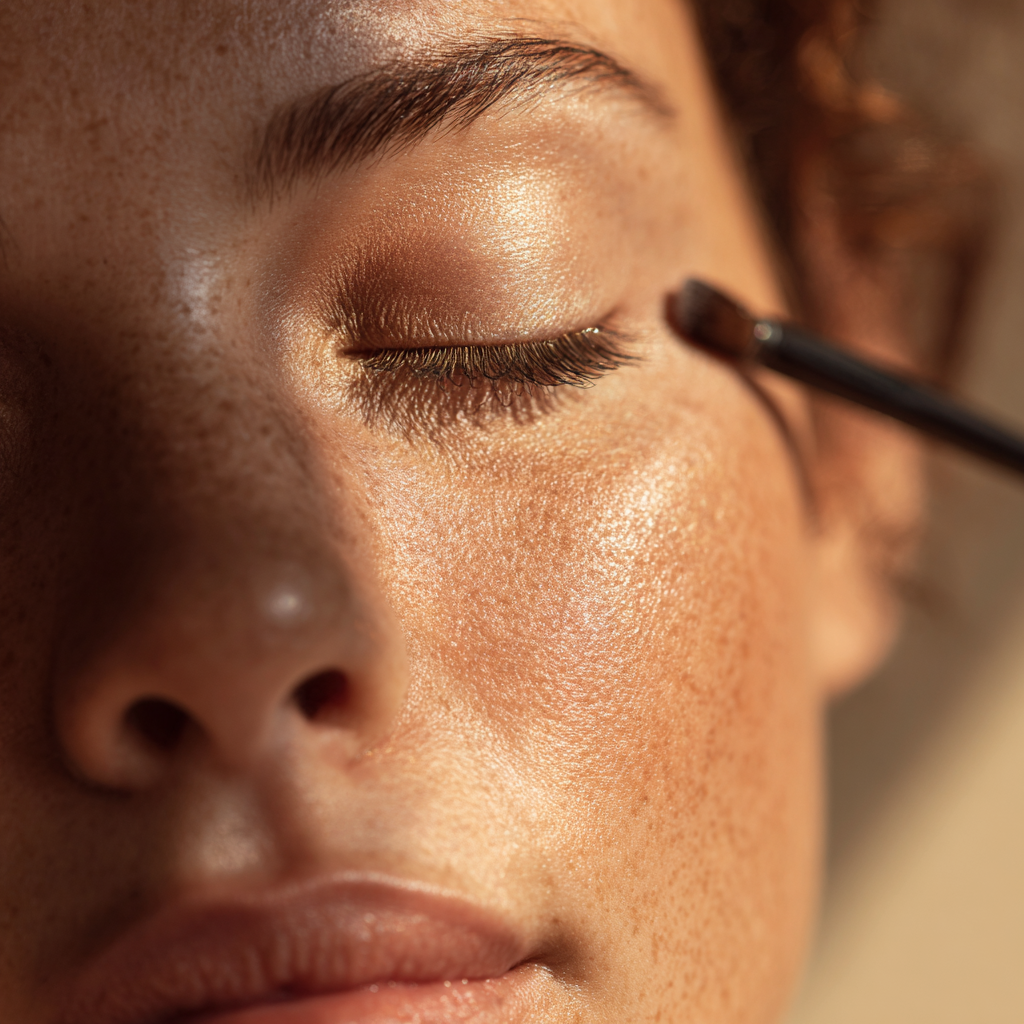
Mascara that can withstand rain. Foundation that stays in place all day. Lipstick that hardly transfers.
Convenient. To give makeup such properties, ingredients are needed that, for example, repel water and oil or ensure a product lasts longer. In some cosmetics, PFAS are used for this purpose.
PFAS is the collective name for thousands of human-made chemicals. They hardly break down and are now found in water, soil, food, and in our bodies.
In 2025, the RIVM published the first national study on PFAS in the blood of people in the Netherlands. It showed that almost everyone has various PFAS in their blood and that the amount in nearly the entire population is above the health-based limit value. In half of the adults, that amount was even five times or more that limit value. Blood samples from 2016 and 2017 were used for the study; the RIVM is now also examining blood samples from 2025 for a more current picture.
And the subject remains topical. The Human Environment and Transport Inspectorate recently warned that PFAS from pesticides pose a growing danger to Dutch drinking water. According to the inspectorate, approximately 21,000 kilos of TFA, a PFAS degradation product, ends up in the water via pesticides every year.
PFAS seems like something related to polluted water and industry. Yet it can also simply be in mascara, foundation, or lipstick.
Makeup stands out in PFAS research
According to the Dutch Cosmetics Association, PFAS currently only occur in a small number of cosmetic products. Nevertheless, a 2024 study of 765 cosmetic products yielded a striking result: of the product groups studied, makeup appeared to be the type of cosmetic in which PFAS were most likely to occur.
The researchers found eleven different PFAS ingredients. PTFE and perfluorodecalin occurred most frequently within the products in which PFAS were detected.
PFAS are attractive to manufacturers because of properties such as water, oil, and dirt repellency. Words like waterproof, transfer-proof, and long-lasting particularly stand out because of this. Such a claim does not automatically mean that there are PFAS in a product, but behind that extra long wear or water resistance is a formulation designed for that purpose.
Radar previously paid extensive attention to PFAS in mascara, foundation, lipstick, and other cosmetics. Repeated exposure was also discussed, as much makeup is used daily and directly on the skin.
The word PFAS is usually not listed anywhere
Anyone looking at the back of a mascara will usually not see the word PFAS listed anywhere.
Cosmetic ingredients are listed with their official INCI name. As a result, a PFAS compound can simply be among the other ingredients without you recognizing what you are reading. Word parts like fluoro, perfluoro, and polyfluoro can be a clue. The Dutch Cosmetics Association mentions, for example, that fluorine in combination with carbon can be recognizable in the INCI name.
Examples found in cosmetics include:
PTFE
Perfluorodecalin
Perfluorononyl Dimethicone
Names that are easy to overlook when you are mainly looking at color, coverage, price, or longevity. Once you recognize those terms, you suddenly read such an ingredient list very differently.
PFAS are increasingly disappearing from cosmetics
The attention on PFAS has now also had consequences for the products themselves. The Netherlands is working with Germany, Denmark, Norway, and Sweden on a broad European restriction of PFAS.
The cosmetics sector is also moving. Cosmetics Europe advised manufacturers to remove intentionally added PFAS from cosmetics for the European market by the end of 2025 at the latest. The Dutch branch indicated the same ambition and reports that manufacturers are switching to alternatives.
It is striking that ingredients that received hardly any attention for years are now being actively removed from products because of their persistence in the environment.
Makeup is therefore only a small part of a much larger PFAS issue.
A different look at your makeup bag
I have sensitive skin myself and have been using Jane Iredale products for years. The brand focuses primarily on mineral makeup and formulas with attention to the skin. I prefer a natural look and tend to use relatively little makeup.
By delving into PFAS, I have also started to look differently at such an everyday product. Waterproof is then no longer just a handy feature and long-lasting not just a nice promise. There is a formulation behind it that determines why a product does what it does.
And it doesn’t have to be turned into a complicated search. Just knowing that names like PTFE or perfluorodecalin can be on an ingredient list helps to read such a list with different eyes.
Looking more consciously often starts with something that has felt very normal for years.
Sources
- RIVM – PFAS in the blood of the Dutch population:
https://www.rivm.nl/en/news/first-nationwide-study-into-pfas-in-blood - RIVM – European proposal to restrict the use of PFAS:
https://www.rivm.nl/en/pfas/restriction-proposal - NL Times / Human Environment and Transport Inspectorate – PFAS in pesticides as a growing risk for drinking water:
https://nltimes.nl/2026/09/12/dutch-inspectorate-harfmul-pfas-chemicals-pose-rising-risk-drinking-water - Radar – PFAS in makeup and daily exposure (in Dutch):
https://radar.avrotros.nl/artikel/pfas-in-make-up-dagelijks-gebruik-is-schadelijk-voor-jouw-gezondheid-60033 - Coiffard et al. (2024) – study on PFAS ingredients in cosmetics:
https://pubmed.ncbi.nlm.nih.gov/38582342/ - Nederlandse Cosmetica Vereniging – PFAS in cosmetics (in Dutch):
https://www.ncv-cosmetica.nl/actueel/pfas-cosmetica/